

Thirteen luxury brands, such as Gucci, Versace and Yves Saint Laurent, are suspected of having used subcontractors in Italy who exploited Chinese workers, as part of an extensive investigation by the Italian justice system.
In a request for information consulted today by AFP, Paolo Storari, a prosecutor from Milan (north), indicated that he had found bags, wallets or clothes from these different brands during searches in Italian workshops that employed “Chinese labor in serious conditions of exploitation”.
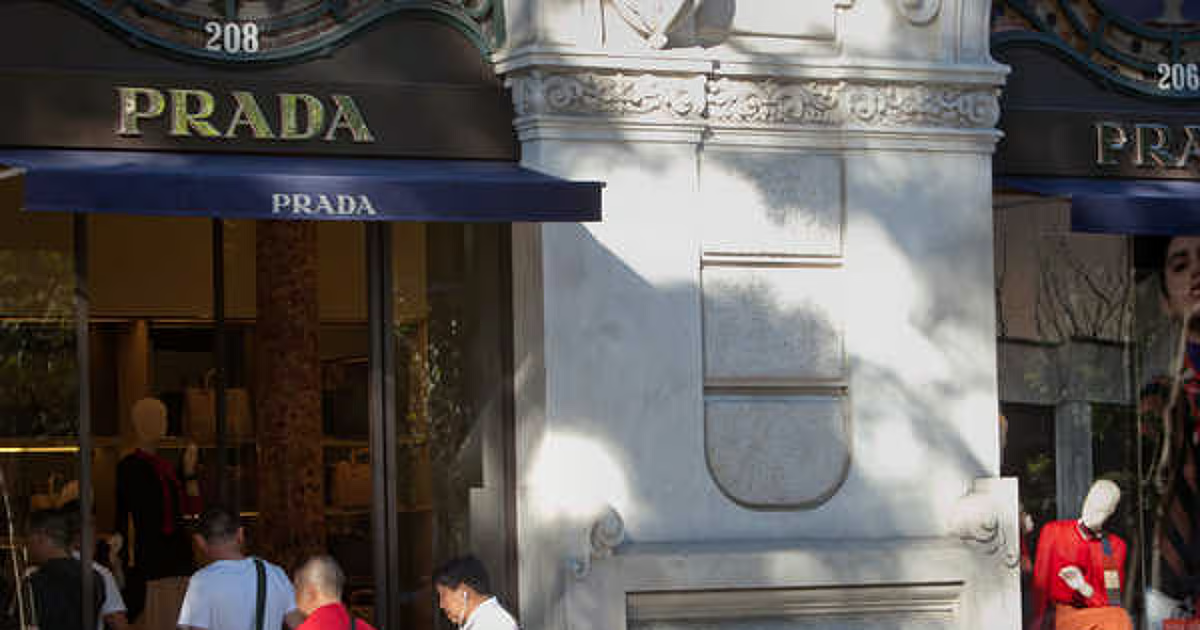
The case concerns the brands of the French group Kering (Gucci, Yves Saint Laurent and Alexander McQueen), Givenchy (LVMH group), but also Prada and its new acquisition Versace, as well as Ferragamo, Pinko, Dolce & Gabbana, Missoni, Off-White, the leather goods manufacturer Coccinelle, and Adidas.
This is the largest extension of an investigation launched last year in the luxury sector, which revealed violations regarding wages and working hours, security breaches and unhealthy accommodation for workers.
The Milan prosecutor asks brands, which continue to be considered innocent, to quickly provide documents on their supply chains, such as internal audits.
Other big names have already been targeted by Italian justice in similar cases: Dior, LVMH’s second brand, leather goods manufacturers Tod’s and Alviero Martini, Valentino Bags Lab, as well as a subsidiary of Armani and Loro Piana (LVMH group).
All of these companies, with the exception of Tod’s, have been placed under interim judicial administration to correct compliance issues and implement systems designed to prevent further abuse in the future.
On Wednesday, a Milanese judge granted a request from Tod’s, which wanted more time to complete the assessment of its supply chain controls, while prosecutors seek to impose a temporary advertising ban and the appointment of external administrators.
Luxury brands subcontract their production to suppliers, who in turn subcontract to others, in a context of increasingly tight margins and insufficient control over working conditions.
However, under Italian law, companies can be held liable for infringements committed by authorized suppliers.
The Italian Government went on the offensive to defend its brands, with the Minister of Industry and “Made in Italy”, Adolfo Urso, declaring that its reputation was being “attacked”.
Tod’s, after denying any irregularity, was granted an 11-week deadline on Wednesday to reinforce its control system over suppliers.
However, campaigners against sweatshops claim that luxury brands themselves impose too low prices on their subcontractors, leading them to subcontract second and third tier suppliers, where controls fail.
Deborah Lucchetti, Italian coordinator of the Clean Clothes campaign, classified the exploitation of workers as a “structural phenomenon” in this sector.
“’Made in Italy’ cannot be a platform to celebrate astronomical profits built on the denial of the dignity of those who sew, assemble and finish the products,” he said in a statement today.
The prosecutor’s request for information follows inspections carried out in November at five suppliers used by several brands.
Between three and nineteen workers, mostly Chinese but also Pakistani, worked at each supplier and were named in court documents.
Some of the brands targeted are Italian branches of the parent companies, such as Yves Saint Laurent Manifatture, Alexander McQueen Italy and Givenchy Italy.